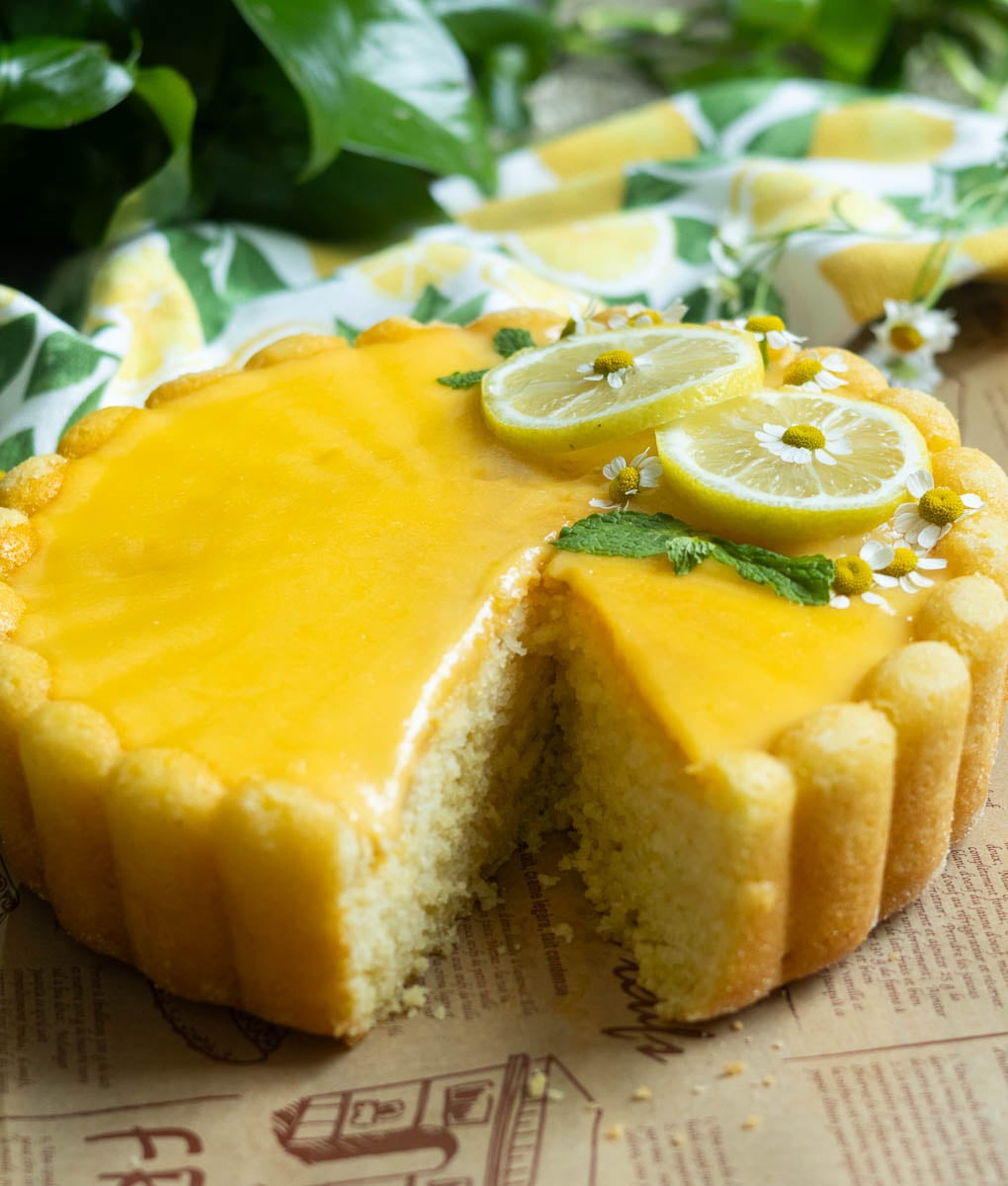
Lemon Semolina Olive Oil Cake
This Lemon Semolina Olive Oil Cake is where Mediterranean baking tradition meets your kitchen in the most delicious way possible. Fine semolina flour, extra virgin olive oil, Greek yogurt, and fresh lemon baked into a golden, tender cake, soaked in a lemon sugar syrup while still hot, and finished with a silky homemade lemon curd that sets on top into the most gorgeous glossy layer.
Print
Save Recipe
Share Recipe
Servings: 12 slices
Calories: 306kcal
Equipment
Ingredients
Lemon Syrup
- 1½ cups granulated sugar
- 1½ cups water
- 1 long strip lemon peel
- 2 tablespoon lemon juice
Cake
- 1 cup fine semolina flour plus more for dusting the pan
- 1 cup all purpose flour
- 2 teaspoon baking powder
- ½ teaspoon baking soda
- 1 cup granulated sugar
- 3 large eggs room temperature
- 1 tablespoon vanilla extract
- Pinch of salt
- ⅓ cup extra virgin olive oil plus more for greasing the pan
- ¾ cup full fat plain Greek yogurt room temperature
- 1 tablespoon lemon zest
- ⅓ cup fresh lemon juice
Lemon Curd
- ⅓ cup granulated sugar
- ⅓ cup fresh lemon juice
- 2 teaspoon lemon zest
- 2 large eggs
- 4 tablespoon unsalted butter cubed
Instructions
Make the syrup
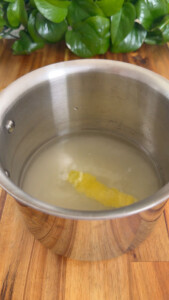
- Combine the granulated sugar, water, lemon peel strip, and lemon juice in a small saucepan over medium heat. Stir until the sugar dissolves then bring to a boil. Let boil for 2 minutes then remove from heat. Set aside to cool completely. The syrup must be fully cold before it goes on the cake.1½ cups granulated sugar, 1½ cups water, 1 long strip lemon peel, 2 tbsp lemon juice
Prep and bake the cake
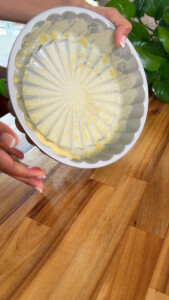
- Preheat your oven to 350F. Grease a 9 inch round cake pan or Charlotte cake pan generously with extra virgin olive oil. Add 1 to 2 tablespoons of fine semolina flour and tilt the pan to coat the bottom and sides evenly. Tap out any excess.
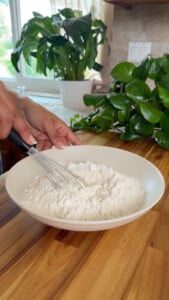
- In a medium bowl whisk together the fine semolina flour, all purpose flour, baking powder, and baking soda until combined. Set aside.1 cup fine semolina flour, 1 cup all purpose flour, 2 tsp baking powder, ½ tsp baking soda
- In a separate large mixing bowl, combine the sugar, eggs, vanilla extract, and salt. Using a hand mixer, beat on medium-high speed for about 4 minutes until the mixture is pale, light, and slightly thickened. Add the olive oil, lemon juice, and Greek yogurt and mix on medium speed until fully incorporated.1 cup granulated sugar, 3 large eggs, 1 tbsp vanilla extract, Pinch of salt, ⅓ cup extra virgin olive oil, ¾ cup full fat plain Greek yogurt, ⅓ cup fresh lemon juice
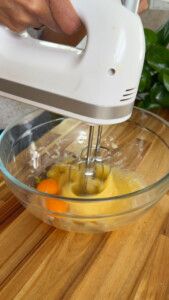
- Add the dry ingredients to the wet ingredients and mix on medium-low speed until just combined, scraping down the sides of the bowl as needed. Do not overmix.
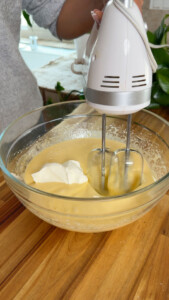
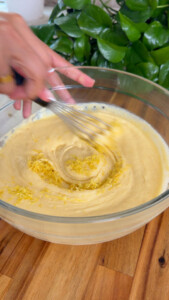
- Add the lemon zest and fold it in gently by hand with a spatula until just distributed.1 tbsp lemon zest
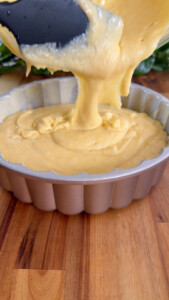
- Pour the batter into the prepared pan. Bake at 350F for 25 to 35 minutes until the top is nicely golden brown and a toothpick inserted in the center comes out clean. Start checking at 25 minutes as oven temperatures vary.
Soak the cake
- As soon as the cake comes out of the oven, immediately flip it onto a wire rack set over a sheet pan to catch any drips. The cake must be hot for this next step to work properly.
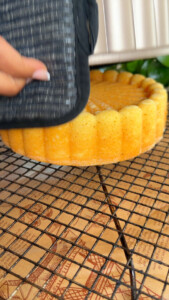
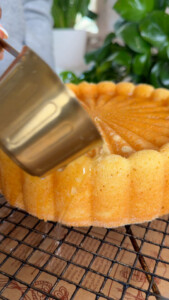
- Using a ladle, pour the cold syrup over the hot cake one ladleful at a time. Let each addition absorb fully into the cake before adding the next. You will see the cake drinking up the syrup in real time. Continue until all the syrup has been used. This is the technique used across Mediterranean syrup cakes from Greek revani to North African basbousa and it is what gives this cake its deeply fragrant, moist crumb.
Make the lemon curd
- Add the sugar, lemon juice, lemon zest, and eggs to a small saucepan and whisk together until combined. Add the cubed butter and place over low heat. Cook, stirring continuously with a wooden spoon or silicone spatula, for about 8 minutes until the curd thickens enough to coat the back of a spoon. Do not walk away from this. Continuous stirring is what prevents the eggs from scrambling.⅓ cup granulated sugar, ⅓ cup fresh lemon juice, 2 tsp lemon zest, 2 large eggs, 4 tbsp unsalted butter

- Immediately strain the warm curd through a fine mesh sieve into a bowl or jar to remove any bits of cooked egg or zest. Press it through with a spatula. Set aside until ready to use. If making ahead, press plastic wrap directly onto the surface to prevent a skin from forming.

Finish with lemon curd
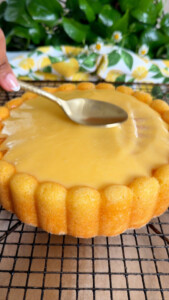
- Once all the syrup has been absorbed, gently warm the lemon curd if it has thickened on standing, then pour it over the top of the cake. Use a spatula to spread it gently to the edges in an even layer. Let the curd set for at least 30 minutes before slicing. Do not rush this. A set curd means clean slices and a beautiful presentation. An impatient curd means a delicious mess. (Still delicious. Just messier.)
Video
Notes
Nutrition facts are only estimates.
Storage
Cover and refrigerate for up to 4 days. The cake actually improves in flavor and moisture as it sits so do not worry about making it ahead. Bring refrigerated cake to room temperature before serving for the best texture and flavor. The lemon curd on top will firm up in the fridge which is perfectly fine. Let it soften at room temperature for 20 minutes before slicing. Not recommended for freezing once the curd has been added.
Nutrition
Calories: 306kcal | Carbohydrates: 66g | Protein: 5g | Fat: 12g | Saturated Fat: 4g | Polyunsaturated Fat: 1g | Monounsaturated Fat: 6g | Trans Fat: 0.2g | Cholesterol: 78mg | Sodium: 145mg | Potassium: 70mg | Fiber: 1g | Sugar: 47g | Vitamin A: 216IU | Vitamin C: 2mg | Calcium: 57mg | Iron: 2mg
Tried this recipe?Mention @lolajay_yum