

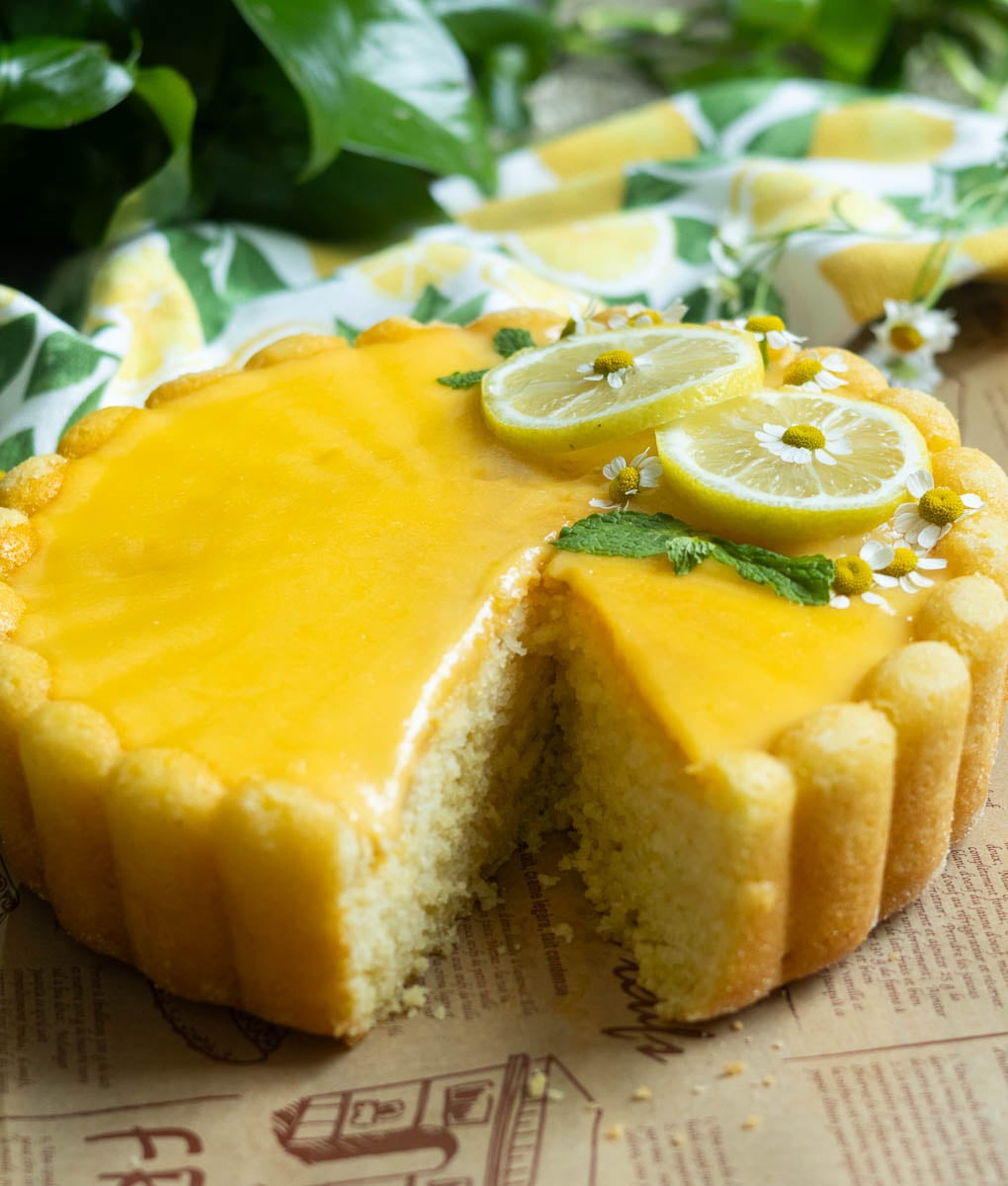
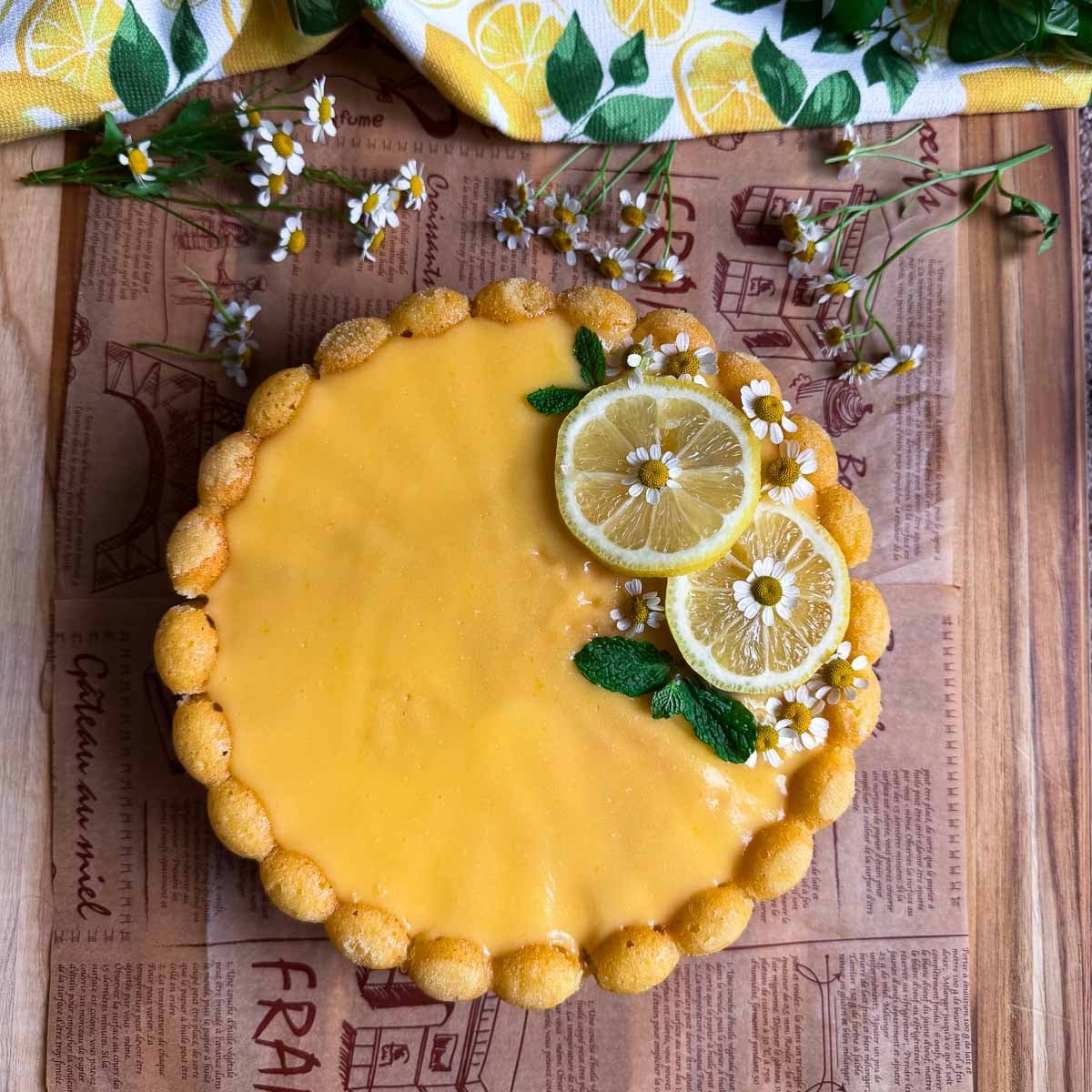
This Lemon Semolina Olive Oil Cake is where Mediterranean baking tradition meets your kitchen in the most delicious way possible. Fine semolina flour, extra virgin olive oil, Greek yogurt, and fresh lemon baked into a golden, tender cake, soaked in a lemon sugar syrup while still hot, and finished with a silky homemade lemon curd that sets on top into the most gorgeous glossy layer.
A Quick Look at the Recipe
✅ Recipe Name: Lemon Semolina Olive Oil Cake
🕒 Ready In: ~ 50 minutes
👪 Serves: 12 servings
🍽 Calories: ~ 306 per serving (estimated)
🥣 Main Ingredients: Semolina flour, all-purpose flour, lemon, extra virgin olive oil
👌 Difficulty: Medium
SUMMARIZE & SAVE THIS CONTENT ON
Semolina cake soaked in syrup is one of the great traditions of Mediterranean baking. In Greece it is called revani, in Turkey irmik keki, across North Africa it appears as basbousa, and in Italy semolina shows up in cakes like torta di semolino. Every version is slightly different but they all share the same philosophy -- a dense, fragrant crumb that drinks up a sweet syrup and becomes something greater than the sum of its parts.
This is my grandmother's version, built around olive oil instead of butter and finished with a delicious lemon curd. Soooooo delicious!!! Speaking of my grandmother, her Orange Blender Cake is pure comfort and smells amazing!
Jump to:
Why You'll Love This Recipe
Extra Virgin Olive Oil: This is a Mediterranean cake through and through. Extra virgin olive oil gives the crumb a richness and a slight fruitiness that butter simply cannot replicate.
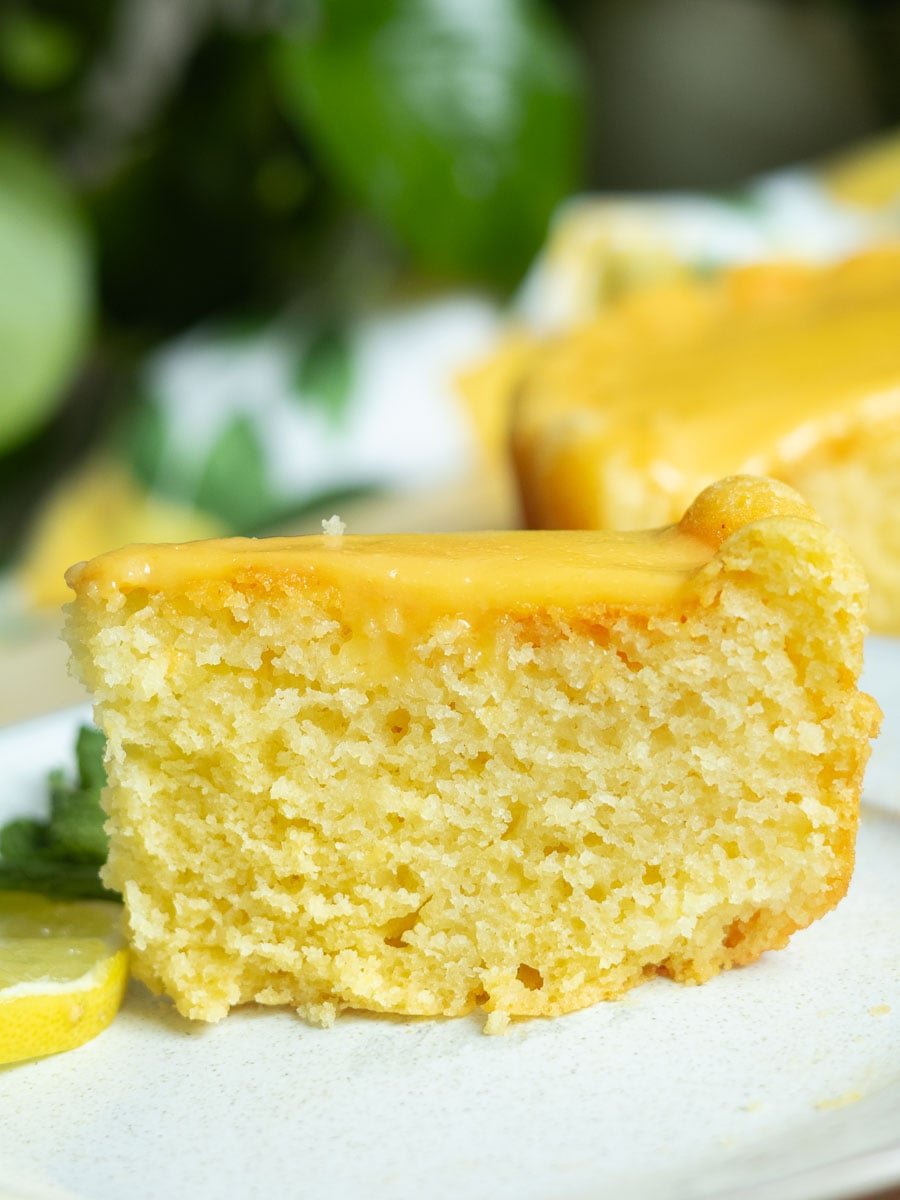
Semolina: The combination of fine semolina and all purpose flour gives this cake a slightly grainy, satisfying texture that is completely different from a standard sponge.
12 slices, feeds a crowd: Make it the day before and it will be even better. This cake gets better as it sits and the syrup continues to distribute through the crumb.
Lemon Semolina Olive Oil Cake Video
If you enjoyed this video for Lemon Semolina Olive Oil Cake, please subscribe to my Youtube Channel and click the BELL icon so you can be the first to know when I post a new video.
Check out some of my other "Ready For Summer" Recipes! Egyptian Lemonade, No-Bake Marscarpone Lemon Cheesecake, Mango Tiramisu and Creamy Strawberry Basil Lemonade!
Ingredient Notes
Fine Semolina Flour: Fine semolina is made from durum wheat and has a slightly coarser texture than all-purpose flour. Make sure you buy fine semolina, not coarse. Coarse semolina will give the cake a gritty texture that does not work here. If you want to learn more about Mediterranean pantry staples like semolina, check out my Mediterranean pantry guide.
Extra Virgin Olive Oil: Olive oil keeps the crumb moist and tender for days longer than butter would and adds a subtle fruity richness that pairs beautifully with the lemon. Use a good quality extra virgin olive oil here. The flavor comes through in the final cake and a neutral or low quality oil will flatten everything out. My Mediterranean olive oil guide has everything you need to know about choosing a good bottle.
Greek Yogurt: Adds moisture and a gentle tang, helping the cake stay tender. Full-fat Greek yogurt is what you want here. Low-fat versions have more water content and can make the batter too loose. The yogurt works together with the olive oil to create a crumb that is rich and moist without being heavy.
The Lemon Syrup Sugar: Simple. But the technique of pouring it cold over a hot cake is everything. When the hot cake meets the cold syrup, it creates an immediate absorption that pulls the syrup deep into the crumb rather than just coating the surface.
Lemon Curd: It sets into a glossy layer in about 30 minutes and the result is a cake that has three distinct layers of lemon flavor working together at once. The zest in the cake batter, the syrup soaked into the crumb, and the curd on top.
Lemon Zest: Added at the very end of mixing and folded in by hand. This is intentional. Overmixing the zest activates the essential oils too aggressively and can make the lemon flavor bitter rather than bright.
Pro tip
The Secret to Perfect Lemon Curd
Always strain the lemon curd. Even small bits of cooked egg white will affect the silky texture you are looking for. A fine mesh strainer takes 30 seconds and the difference in texture is significant.
Substitutions & Variations
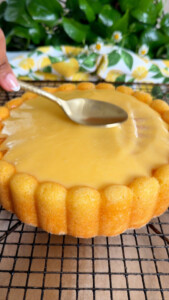
No Charlotte cake pan? A standard 9 inch round cake pan works perfectly here. Grease it well with olive oil and dust with semolina just as you would the Charlotte pan. The cake will be slightly flatter but equally delicious.
Want to make the curd ahead? The lemon curd can be made up to 5 days ahead and stored in the fridge. Warm it gently before pouring over the cake so it spreads easily.
Want to skip the curd? The syrup-soaked cake is completely delicious on its own with just a dusting of powdered sugar and some fresh lemon zest on top. Although the curd does take it to another level.
FAQ
es and it is actually better the next day. The syrup continues to distribute evenly through the crumb overnight and the flavors deepen. Cover loosely and store in the fridge for up to 4 days. Bring to room temperature before serving.
A dense cake usually means the eggs and sugar were not beaten long enough or the batter was overmixed after the dry ingredients were added. Beat the eggs and sugar for the full 4 minutes until genuinely pale and light, and mix the dry ingredients in on low speed just until combined.
More Dessert Recipes You'll Love
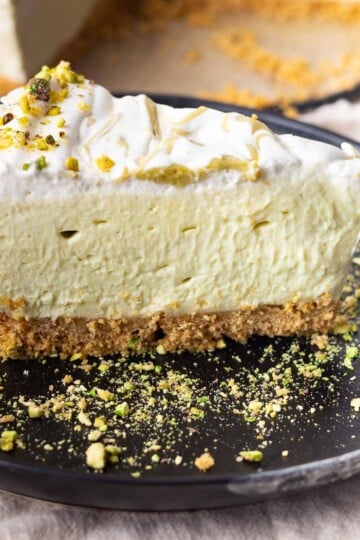
- No-Bake Mascarpone Lemon Cheesecake5 Hours 15 Minutes
- No-Bake Mascarpone Pistachio Cheesecake8 Hours 15 Minutes
- Lemon Posset Recipe2 Hours 10 Minutes
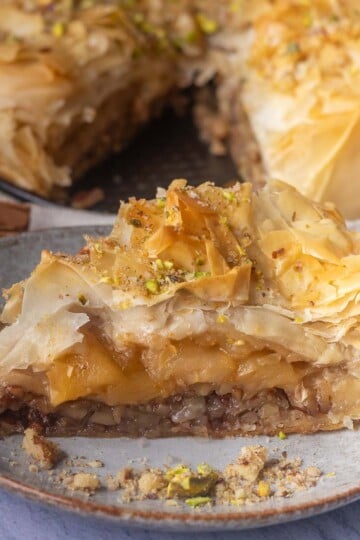
- Apple Pie Baklava45 Minutes


⭐️ Recipe
Lemon Semolina Olive Oil Cake
Equipment
Ingredients
Lemon Syrup
- 1½ cups granulated sugar
- 1½ cups water
- 1 long strip lemon peel
- 2 tablespoon lemon juice
Cake
- 1 cup fine semolina flour plus more for dusting the pan
- 1 cup all purpose flour
- 2 teaspoon baking powder
- ½ teaspoon baking soda
- 1 cup granulated sugar
- 3 large eggs room temperature
- 1 tablespoon vanilla extract
- Pinch of salt
- ⅓ cup extra virgin olive oil plus more for greasing the pan
- ¾ cup full fat plain Greek yogurt room temperature
- 1 tablespoon lemon zest
- ⅓ cup fresh lemon juice
Lemon Curd
- ⅓ cup granulated sugar
- ⅓ cup fresh lemon juice
- 2 teaspoon lemon zest
- 2 large eggs
- 4 tablespoon unsalted butter cubed
Instructions
Make the syrup
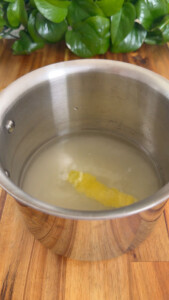
- Combine the granulated sugar, water, lemon peel strip, and lemon juice in a small saucepan over medium heat. Stir until the sugar dissolves then bring to a boil. Let boil for 2 minutes then remove from heat. Set aside to cool completely. The syrup must be fully cold before it goes on the cake.1½ cups granulated sugar, 1½ cups water, 1 long strip lemon peel, 2 tbsp lemon juice
Prep and bake the cake
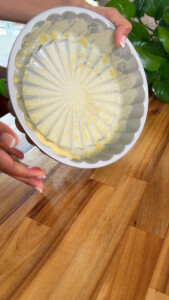
- Preheat your oven to 350F. Grease a 9 inch round cake pan or Charlotte cake pan generously with extra virgin olive oil. Add 1 to 2 tablespoons of fine semolina flour and tilt the pan to coat the bottom and sides evenly. Tap out any excess.
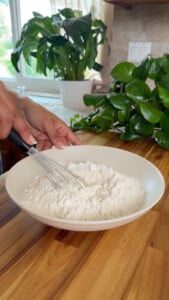
- In a medium bowl whisk together the fine semolina flour, all purpose flour, baking powder, and baking soda until combined. Set aside.1 cup fine semolina flour, 1 cup all purpose flour, 2 tsp baking powder, ½ tsp baking soda
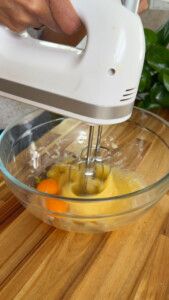
- In a separate large mixing bowl, combine the sugar, eggs, vanilla extract, and salt. Using a hand mixer, beat on medium-high speed for about 4 minutes until the mixture is pale, light, and slightly thickened. Add the olive oil, lemon juice, and Greek yogurt and mix on medium speed until fully incorporated.1 cup granulated sugar, 3 large eggs, 1 tbsp vanilla extract, Pinch of salt, ⅓ cup extra virgin olive oil, ¾ cup full fat plain Greek yogurt, ⅓ cup fresh lemon juice
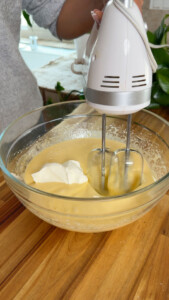
- Add the dry ingredients to the wet ingredients and mix on medium-low speed until just combined, scraping down the sides of the bowl as needed. Do not overmix.
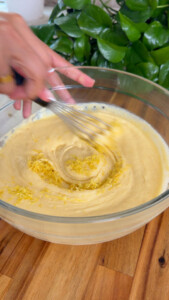
- Add the lemon zest and fold it in gently by hand with a spatula until just distributed.1 tbsp lemon zest
- Pour the batter into the prepared pan. Bake at 350F for 25 to 35 minutes until the top is nicely golden brown and a toothpick inserted in the center comes out clean. Start checking at 25 minutes as oven temperatures vary.
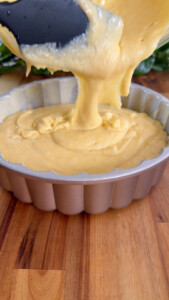
Soak the cake
- As soon as the cake comes out of the oven, immediately flip it onto a wire rack set over a sheet pan to catch any drips. The cake must be hot for this next step to work properly.
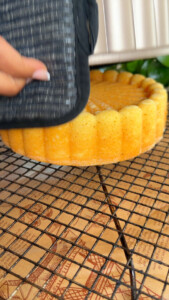
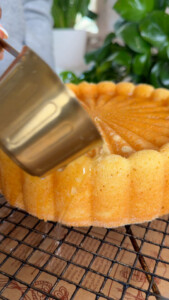
- Using a ladle, pour the cold syrup over the hot cake one ladleful at a time. Let each addition absorb fully into the cake before adding the next. You will see the cake drinking up the syrup in real time. Continue until all the syrup has been used. This is the technique used across Mediterranean syrup cakes from Greek revani to North African basbousa and it is what gives this cake its deeply fragrant, moist crumb.
Make the lemon curd
- Add the sugar, lemon juice, lemon zest, and eggs to a small saucepan and whisk together until combined. Add the cubed butter and place over low heat. Cook, stirring continuously with a wooden spoon or silicone spatula, for about 8 minutes until the curd thickens enough to coat the back of a spoon. Do not walk away from this. Continuous stirring is what prevents the eggs from scrambling.⅓ cup granulated sugar, ⅓ cup fresh lemon juice, 2 tsp lemon zest, 2 large eggs, 4 tbsp unsalted butter
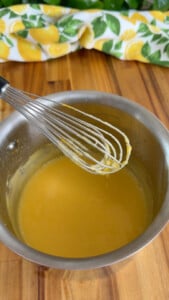
- Immediately strain the warm curd through a fine mesh sieve into a bowl or jar to remove any bits of cooked egg or zest. Press it through with a spatula. Set aside until ready to use. If making ahead, press plastic wrap directly onto the surface to prevent a skin from forming.

Finish with lemon curd
- Once all the syrup has been absorbed, gently warm the lemon curd if it has thickened on standing, then pour it over the top of the cake. Use a spatula to spread it gently to the edges in an even layer. Let the curd set for at least 30 minutes before slicing. Do not rush this. A set curd means clean slices and a beautiful presentation. An impatient curd means a delicious mess. (Still delicious. Just messier.)


Mare says
Made this last night and finished it off with lemon curd today and this was delicious and refreshing, definite keeper of a recipe and for my first time making lemon curd it was not as hard as I thought and definitely use a fine mesh strainer for it, makes all the difference. Also bought a charlotte pan for this and it worked out perfectly. Thank you for an amazing recipe 🩷
Lola Jay says
That's great to hear!!! I am glad you enjoyed it! Thank you!! 🩷