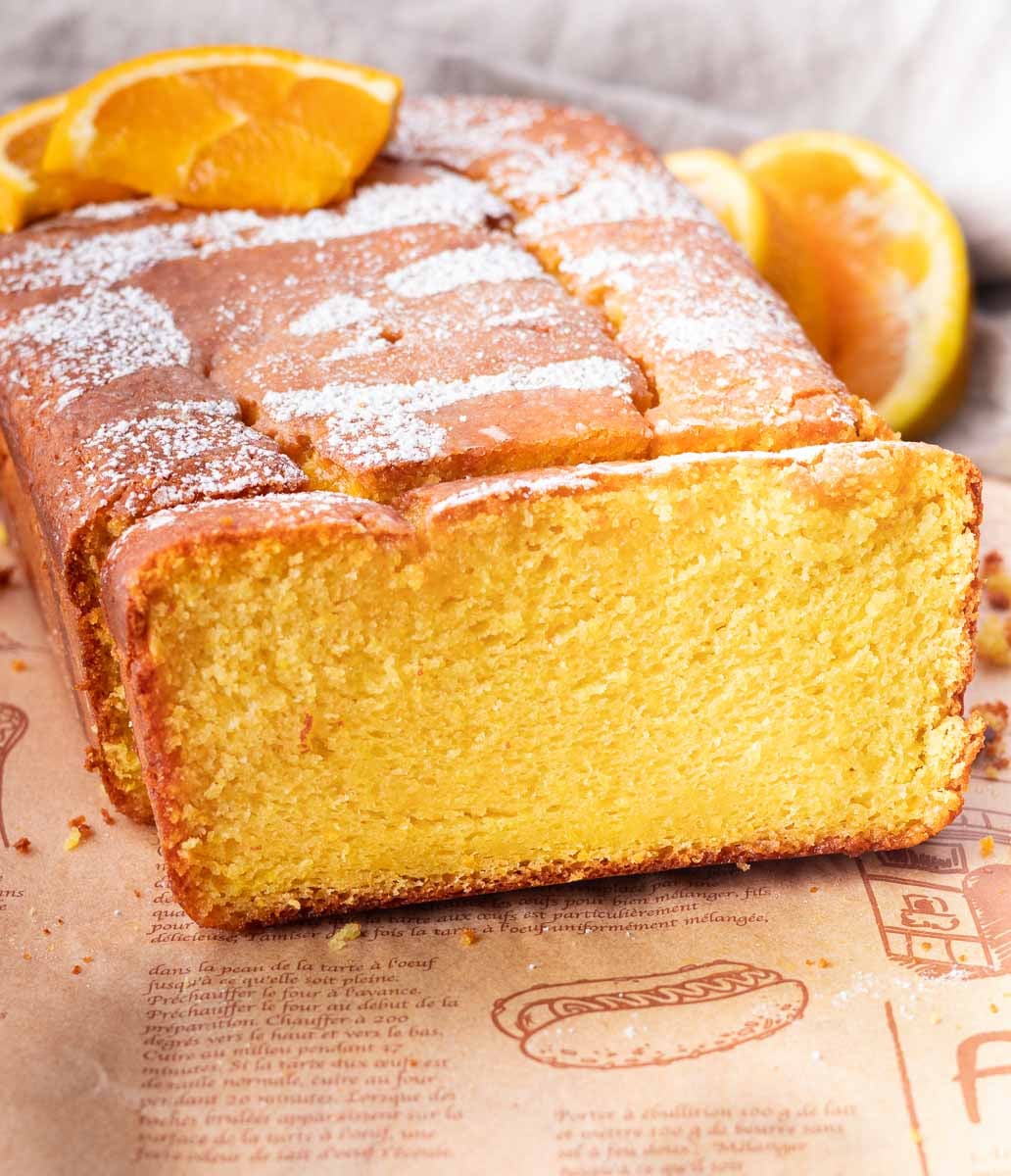
Orange Blender Cake
One whole orange, peel and all, blended smooth with eggs, extra virgin olive oil, and Greek yogurt, pulsed with flour until just combined, and baked into one of the moistest, most fragrant cakes you will ever make.
Print
Save Recipe
Share Recipe
Servings: 10
Calories: 312kcal
Ingredients
Cake
- 1 whole seedless organic navel orange washed and cut into four
- 4 large eggs room temperature
- ¾ cup extra virgin olive oil
- ½ cup full fat Greek yogurt
- ¾ cup granulated sugar
- 1 teaspoon vanilla extract
- 2 teaspoon Fleur d'Oranger or Grand Marnier (optional) orange blossom
- 2 cups all purpose flour
- 2.5 teaspoon baking powder
- ½ teaspoon salt
Orange blossom glaze
- ¾ cup confectioners sugar
- 2 tablespoon fresh squeezed orange juice
- ¼ teaspoon Fleur d'Oranger orange blossom (optional)
For finishing
- Powdered sugar for dusting optional
Instructions
Prep and blend
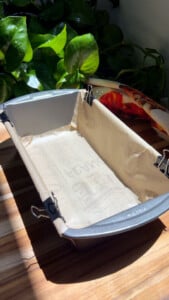
- Preheat your oven to 350F. Line a 9x5-inch loaf pan with parchment paper, leaving some overhang on the sides for easy removal. I used clips to clip the sides down.
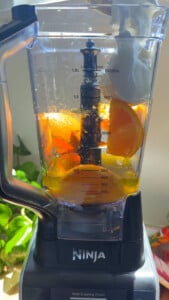
- Wash the orange thoroughly under running water. Cut into quarters and remove any seeds. Add the quartered orange including the peel to the blender. Add the eggs, extra virgin olive oil, Greek yogurt, vanilla extract, and Fleur d'Oranger if using. Blend on high for a full 60 seconds until the mixture is completely smooth and the orange peel is fully broken down. There should be no visible chunks of peel remaining.1 whole seedless organic navel orange, 4 large eggs, ¾ cup extra virgin olive oil, ½ cup full fat Greek yogurt, 1 tsp vanilla extract, 2 tsp Fleur d'Oranger or Grand Marnier (optional)
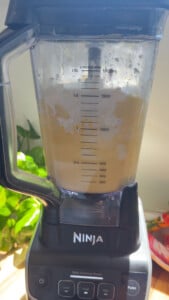
- Add the all-purpose flour, baking powder, sugar, and salt to the blender on top of the wet mixture. Pulse 3 to 4 times until the dry ingredients are just incorporated into the batter. Do not blend continuously. Stop and check with a spatula after each pulse. If you see small streaks of flour use the spatula to gently fold them in rather than pulsing again. Overmixing after the flour goes in will make the cake tough and dense.¾ cup granulated sugar, 2 cups all purpose flour, 2.5 tsp baking powder, ½ tsp salt
Bake
- Pour the batter into the prepared loaf pan and smooth the top gently with the spatula. Tap the pan on the counter a few times to release any air bubbles.
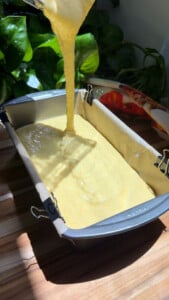
- Bake at 350F for 50 to 55 minutes until the top is deep golden brown and a toothpick inserted into the center of the cake comes out clean with no wet batter attached. If the top is browning too quickly before the center is cooked through, lay a loose piece of foil over the top for the remaining bake time. Every oven is different so start checking at 45 minutes.
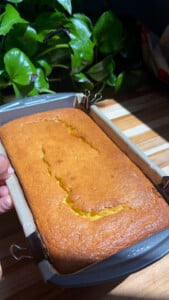
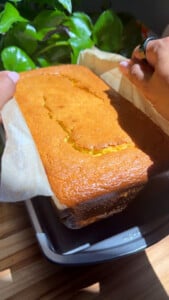
- Remove from the oven and let the cake cool in the pan on a wire rack for 15 minutes. Then use the parchment overhang to lift the cake out of the pan and transfer it directly to the wire rack. Let it cool completely before glazing. This takes about an hour and cannot be rushed. A warm cake will absorb the glaze rather than letting it set on top.
Make the glaze
- Once the cake is completely cool, whisk together the confectioners sugar, fresh squeezed orange juice, and Fleur d'Oranger if using in a small bowl until completely smooth and pourable. The glaze should be thick enough to coat the back of a spoon but thin enough to pour. If it is too thick add orange juice half a teaspoon at a time. If it is too thin add a little more confectioners sugar.¾ cup confectioners sugar, 2 tbsp fresh squeezed orange juice, ¼ tsp Fleur d'Oranger
Glaze and finish
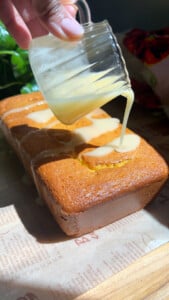
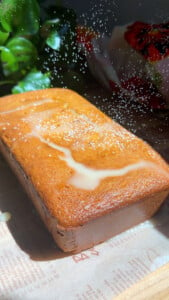
- Place the cooled cake on the wire rack with a sheet of parchment underneath to catch any drips. Pour the glaze slowly over the top of the cake letting it run down the sides naturally. Let the glaze set for 15 to 20 minutes until it forms a thin shell on the surface. Dust with powdered sugar right before serving if desired.Powdered sugar for dusting
Video
Notes
Nutrition facts are only estimates.
Storage
Store the glazed cake at room temperature covered loosely with plastic wrap or under a cake dome for up to 3 days. The flavor and moisture actually improve on day two and day three as the orange flavor deepens and the crumb becomes even more tender. Refrigerating the cake is not recommended as it dries out the crumb. For longer storage, freeze without the glaze for up to 2 months wrapped tightly in plastic wrap then foil. Thaw at room temperature overnight and glaze fresh before serving.
Nutrition
Calories: 312kcal | Carbohydrates: 44g | Protein: 6g | Fat: 18g | Saturated Fat: 3g | Polyunsaturated Fat: 2g | Monounsaturated Fat: 12g | Trans Fat: 0.01g | Cholesterol: 66mg | Sodium: 252mg | Potassium: 67mg | Fiber: 1g | Sugar: 24g | Vitamin A: 95IU | Calcium: 84mg | Iron: 2mg
Tried this recipe?Mention @lolajay_yum