

When people ask me where to start with Mediterranean cooking, I always come back to the same foundation, Mediterranean pantry staples that make simple food taste incredible. If you’ve ever cooked a Mediterranean recipe that should have been great but somehow tasted a little flat, it’s usually not you. And it’s usually not the recipe either. It’s the pantry.
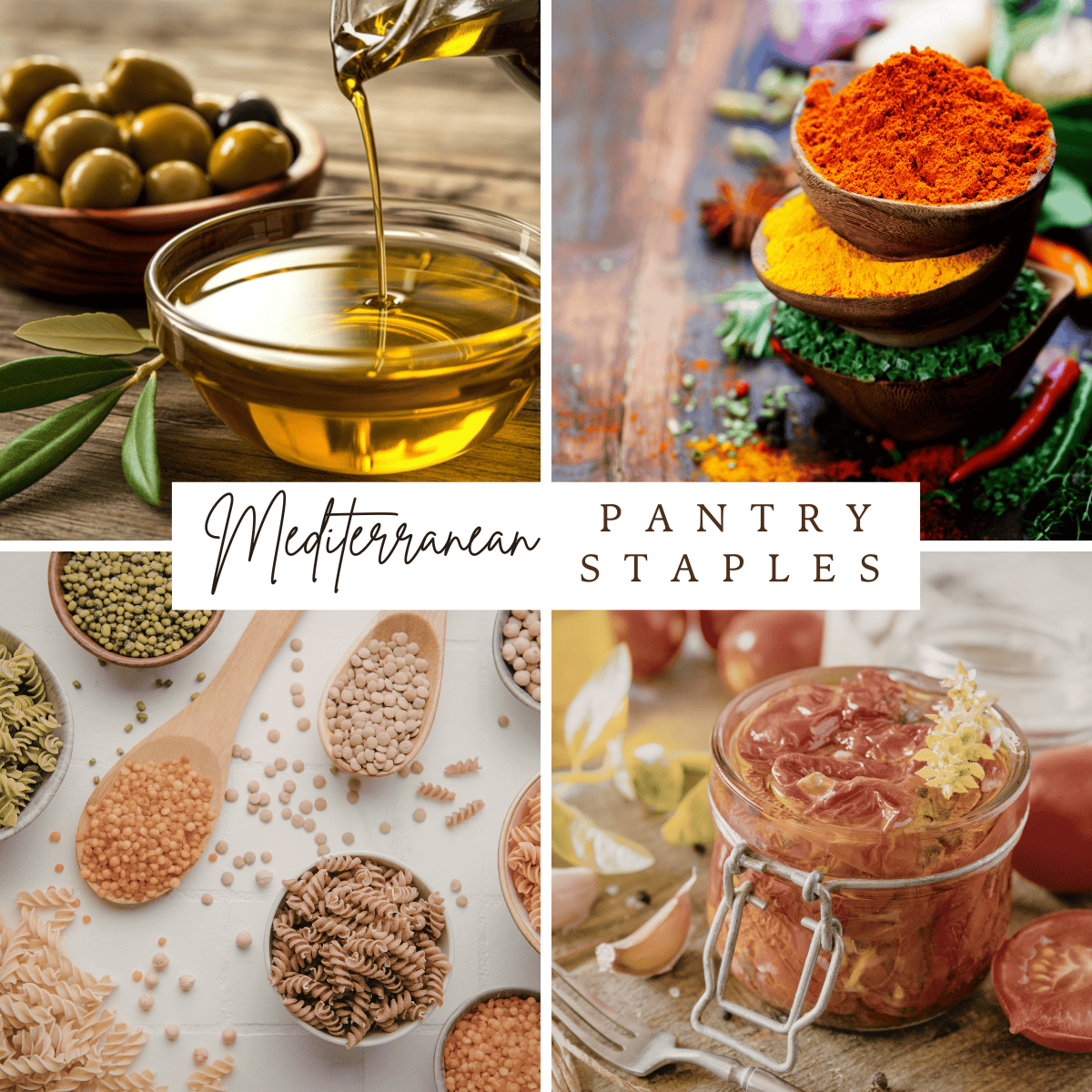
Mediterranean cooking becomes second nature once your pantry is set up correctly. Not perfectly. Just correctly. This way of cooking is not about special ingredients you only pull out for one recipe. It is about a small group of staples that show up again and again, sometimes quietly, sometimes doing the heavy lifting!
Jump to:
What Makes a Mediterranean Pantry Different
Mediterranean cooking isn’t one cuisine. It’s a whole region. But the Mediterranean pantry logic stays surprisingly consistent. Once you stock a few key Mediterranean pantry staples, weeknight meals get easier, faster, and way more flavorful.
You’ll notice a few patterns right away:
- Extra Virgin Olive Oil does most of the heavy lifting
- Herbs and aromatics bring the flavor
- Acid like lemon or vinegar keeps things bright
Olive Oil and Olives
If Mediterranean cooking had a starting point, this would be it.
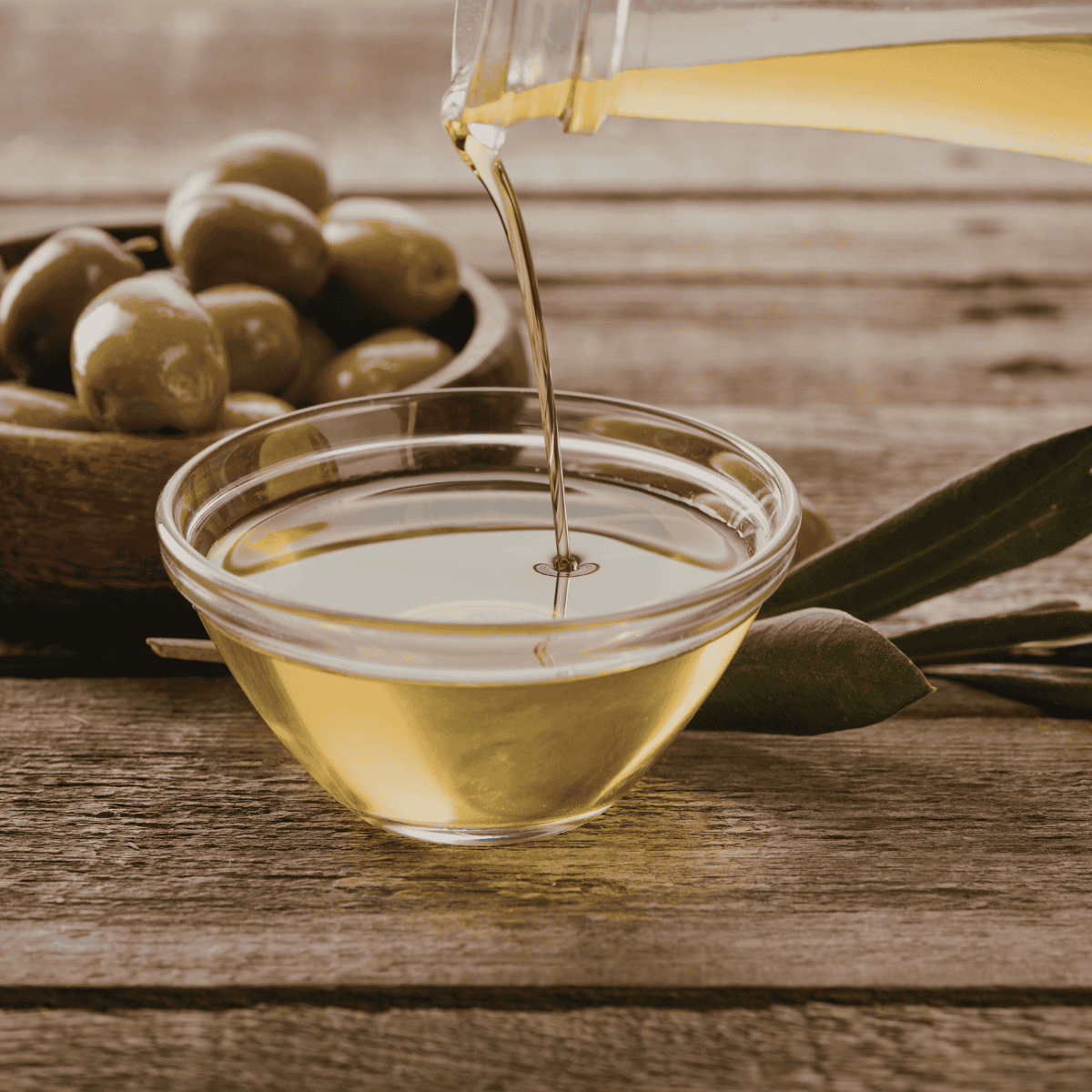
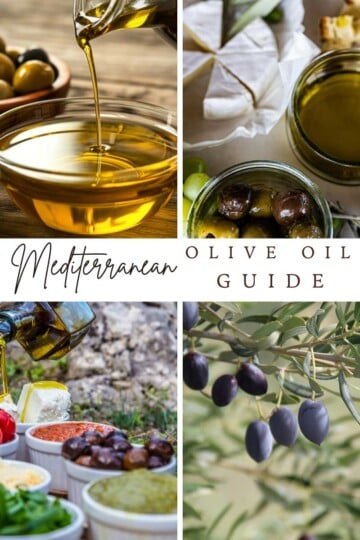
Olive oil is used constantly. To cook vegetables, build sauces,dress salads and to finish dishes right before serving. It is not just fat. It is flavor.
I keep extra virgin olive oil on hand because it adds fruitiness and body that you can taste, especially in simple food. If olive oil smells fresh and pleasant, it will make your food better. If it smells like nothing, it will taste like nothing. See my Olive Oil Guide for a more in-depth look at picking a good olive oil.
Olives belong in this same category. They bring salt and depth in places where you might otherwise reach for cheese or anchovies. Kalamata olives are briny and bold. Castelvetrano olives are mild and buttery. One good jar is enough to start.
When something tastes flat, a drizzle of olive oil or a few chopped olives often fixes it without adding more salt.
Herbs & Spices
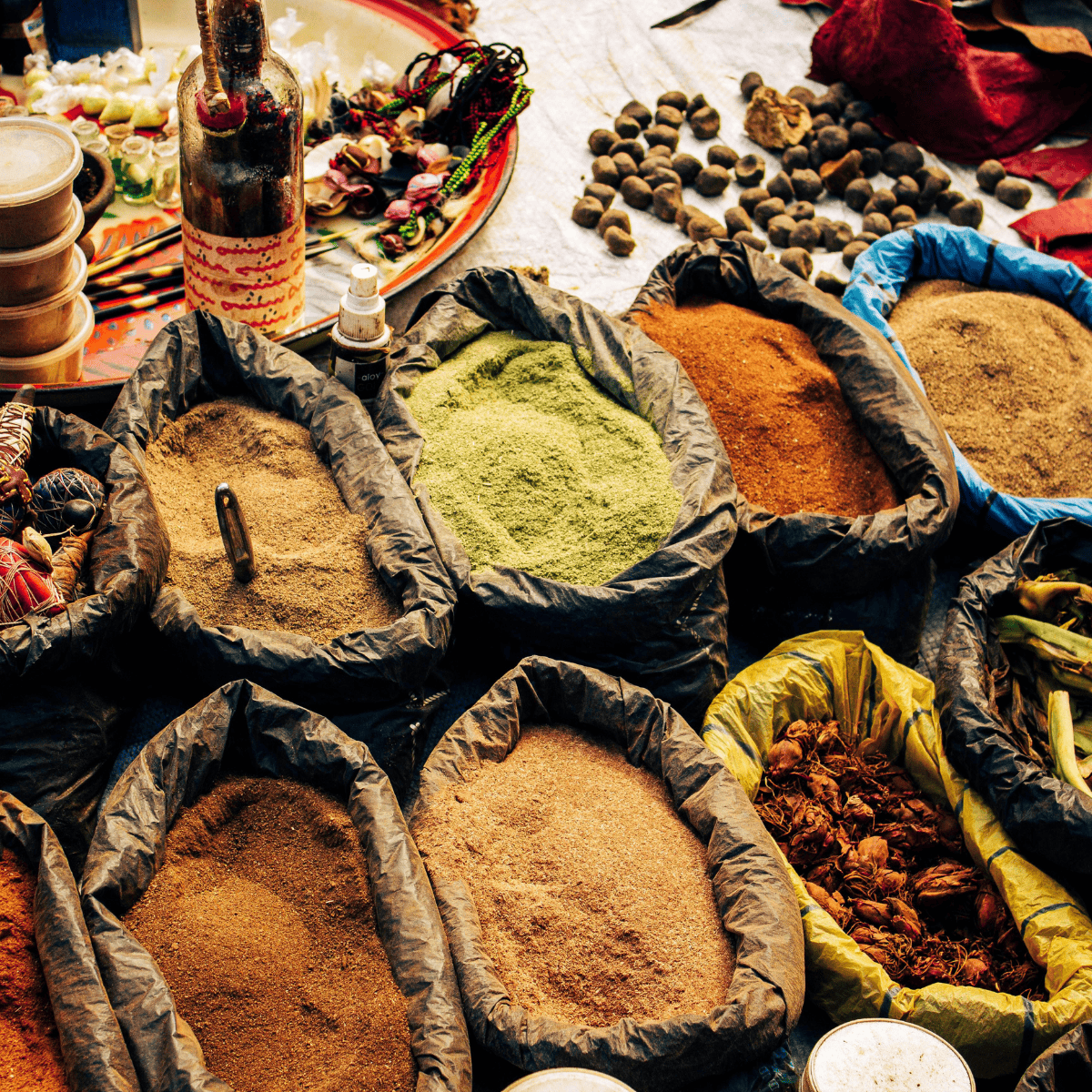
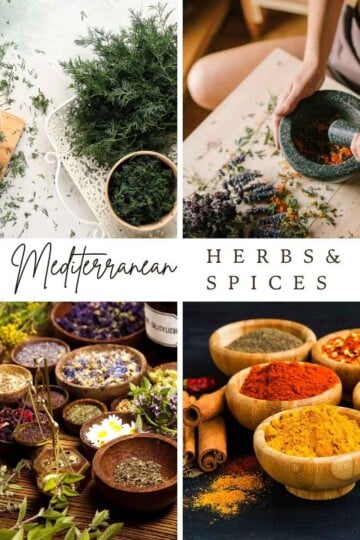
Mediterranean food does not rely on large spice blends in everyday cooking. It relies on a small group of familiar herbs used consistently.
Dried oregano, thyme, bay leaves, paprika, cumin, cinnamon and black pepper form the base. Aleppo pepper for gentle heat. These are the flavors people recognize even if they cannot name them.
Then there are regional spices that show up more intentionally. Saffron for rice and seafood. Sumac for brightness. Ras el hanout for warmth and depth. Za’atar for an Eastern Mediterranean feel.
If you want help pairing these spices correctly or knowing when to use everyday herbs versus regional ones like sumac or ras el hanout, I break that down step by step in my Mediterranean herbs and spices guide.
Grains & Pasta
Grains are what make Mediterranean cooking feel grounding and satisfying. They stretch meals, soak up flavor, and show up across the region in different forms.
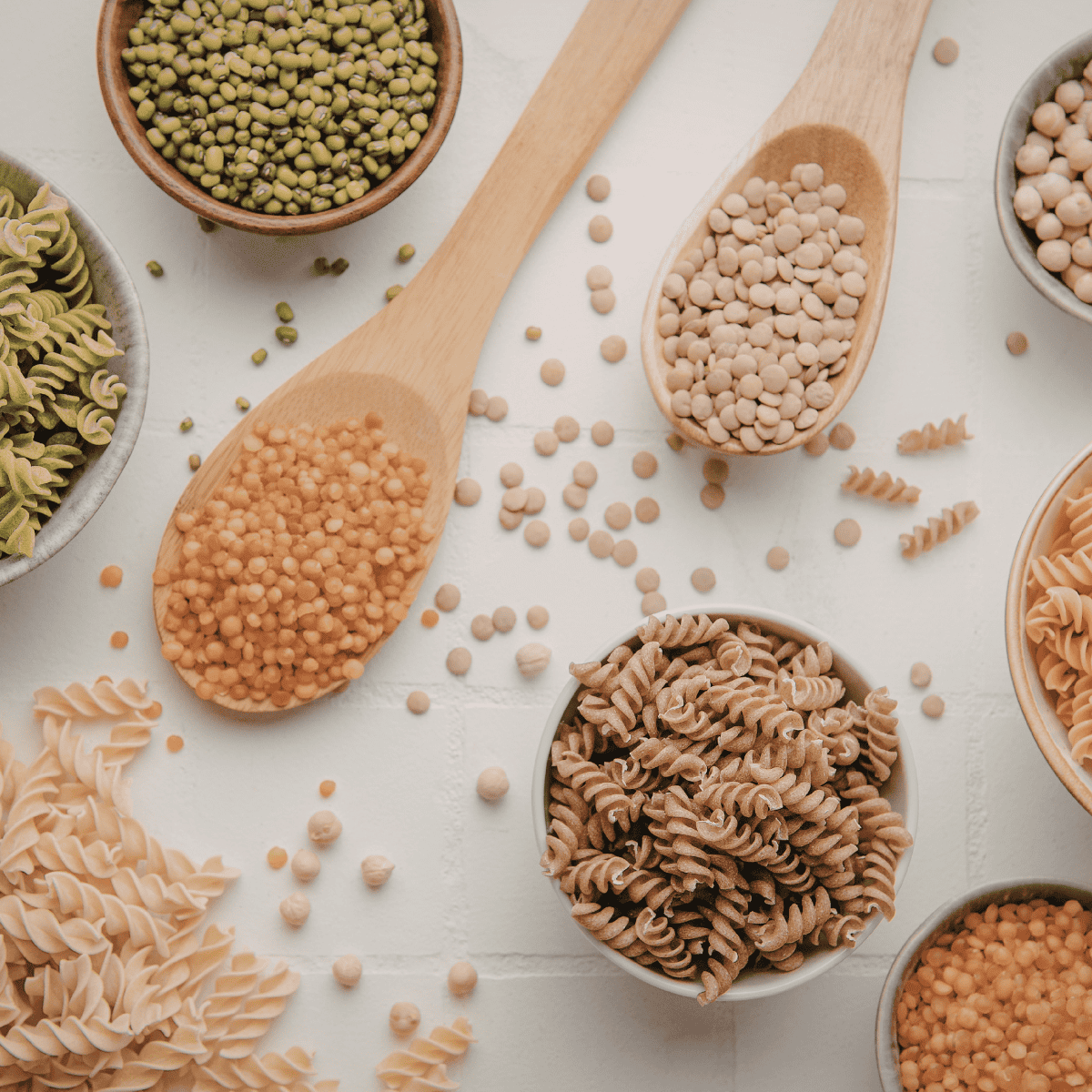
You’ll see rice used in soups, pilafs, and baked dishes. I love basmati rice, though calrose rice is used in many regions. Orzo appears in brothy soups and simple pastas. Couscous cooks quickly and works well as a base for vegetables and meats. Farro and barley bring a hearty, chewy texture that’s great in salads and warm bowls. Bulgur is common in salads and pilafs because it cooks fast and stays light.
Whole wheat pasta and semolina pasta are everyday staples in many Mediterranean kitchens. They’re not “health swaps.” They’re simply what’s traditionally used.
You don’t need all of these at once. Start with one or two that fit how you cook now. Orzo and rice are easy places to begin. Farro or couscous can come later.
The most important thing to remember is seasoning. Grains should taste good on their own before anything else is added. When the base is flavorful, everything built on top of it works better.
Beans and Legumes
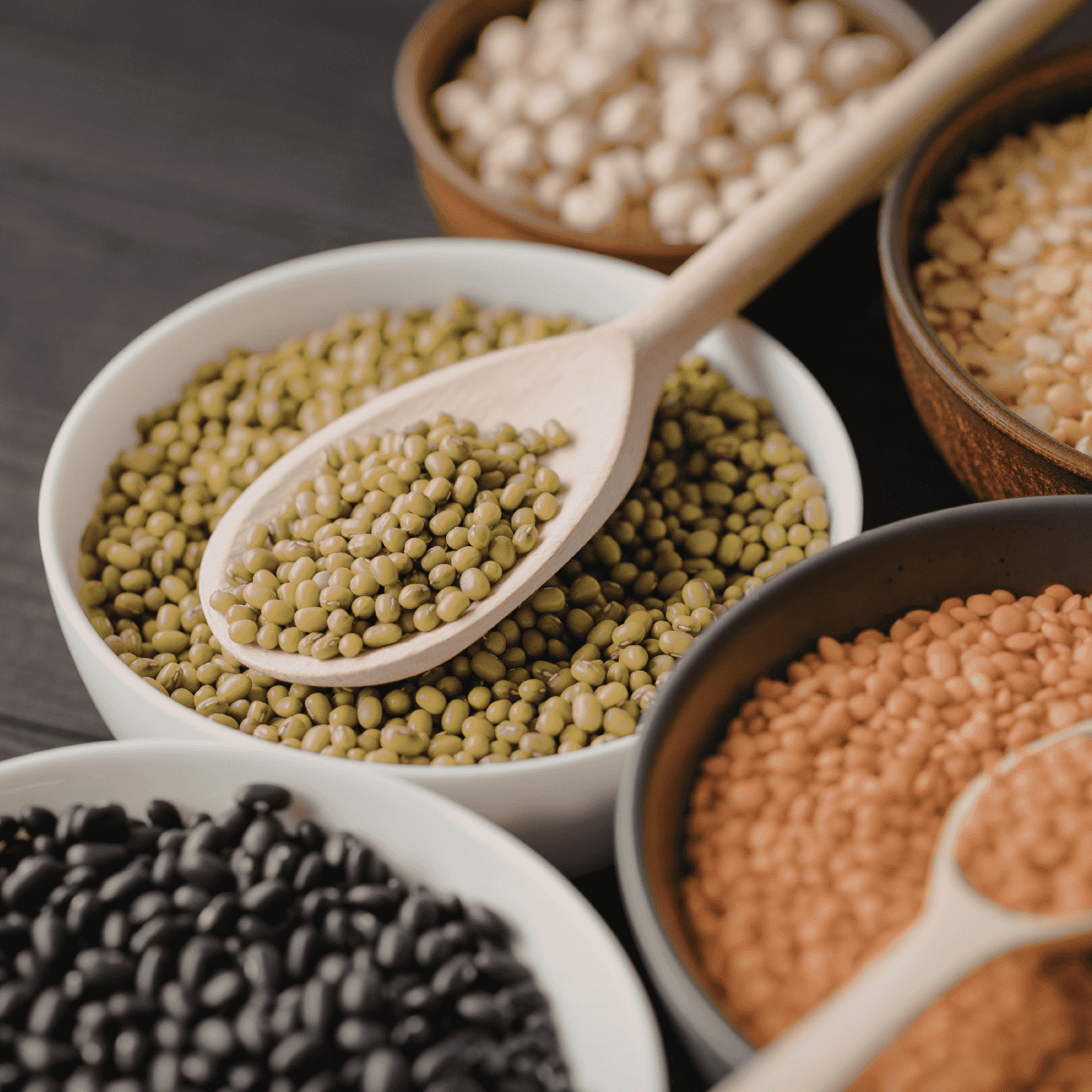
Beans and lentils show up constantly in Mediterranean cooking. They add protein and substance without making meals feel heavy.
Chickpeas, white beans, lentils, fava beans, and kidney beans are all common across the region. Chickpeas and white beans are workhorses for salads, soups, and stews.
Lentils cook quickly and are perfect for simple, nourishing meals. Fava beans are often used in spreads, soups, and grain-based dishes, especially in Eastern Mediterranean cooking. Kidney beans appear in heartier stews and slow-cooked dishes where they can hold their shape.
Nuts and Seeds
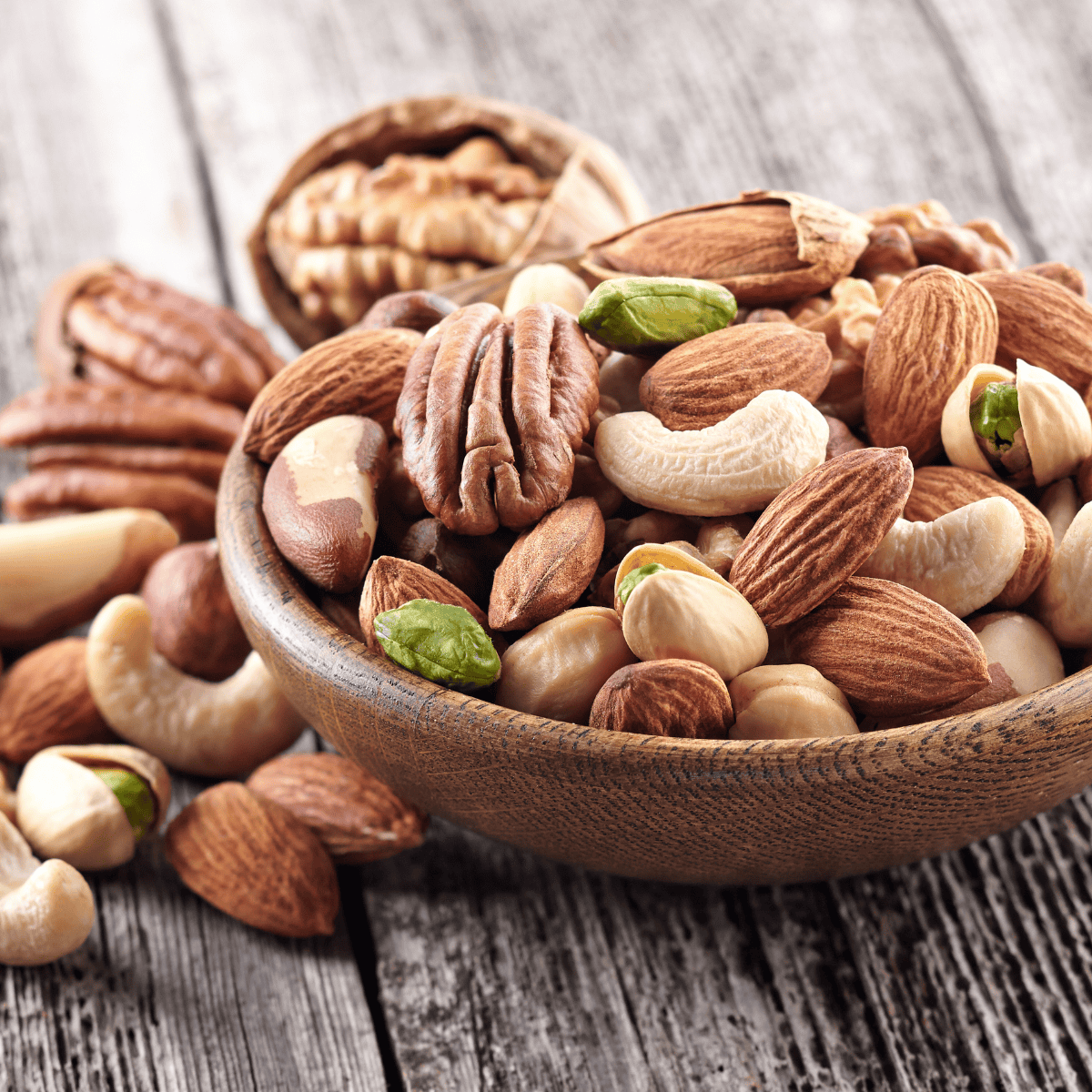
Nuts and seeds show up all over Mediterranean cooking, often in small amounts but with a big impact on texture and flavor.
Almonds, walnuts, pistachios, pine nuts, sesame seeds, and sunflower seeds are some of the most common. Almonds and walnuts are often chopped into salads, grain bowls, and sauces.
Pistachios add richness and color, especially in Middle Eastern and Eastern Mediterranean dishes. Pine nuts are used more sparingly, usually toasted and sprinkled over vegetables, pasta, or grains. Sesame seeds appear whole, toasted, or ground into tahini.
The biggest thing to watch for is freshness. Nuts can turn bitter if they sit too long. I store most of mine in the freezer so they last longer and taste better.
Tomatoes, Garlic, and Onions
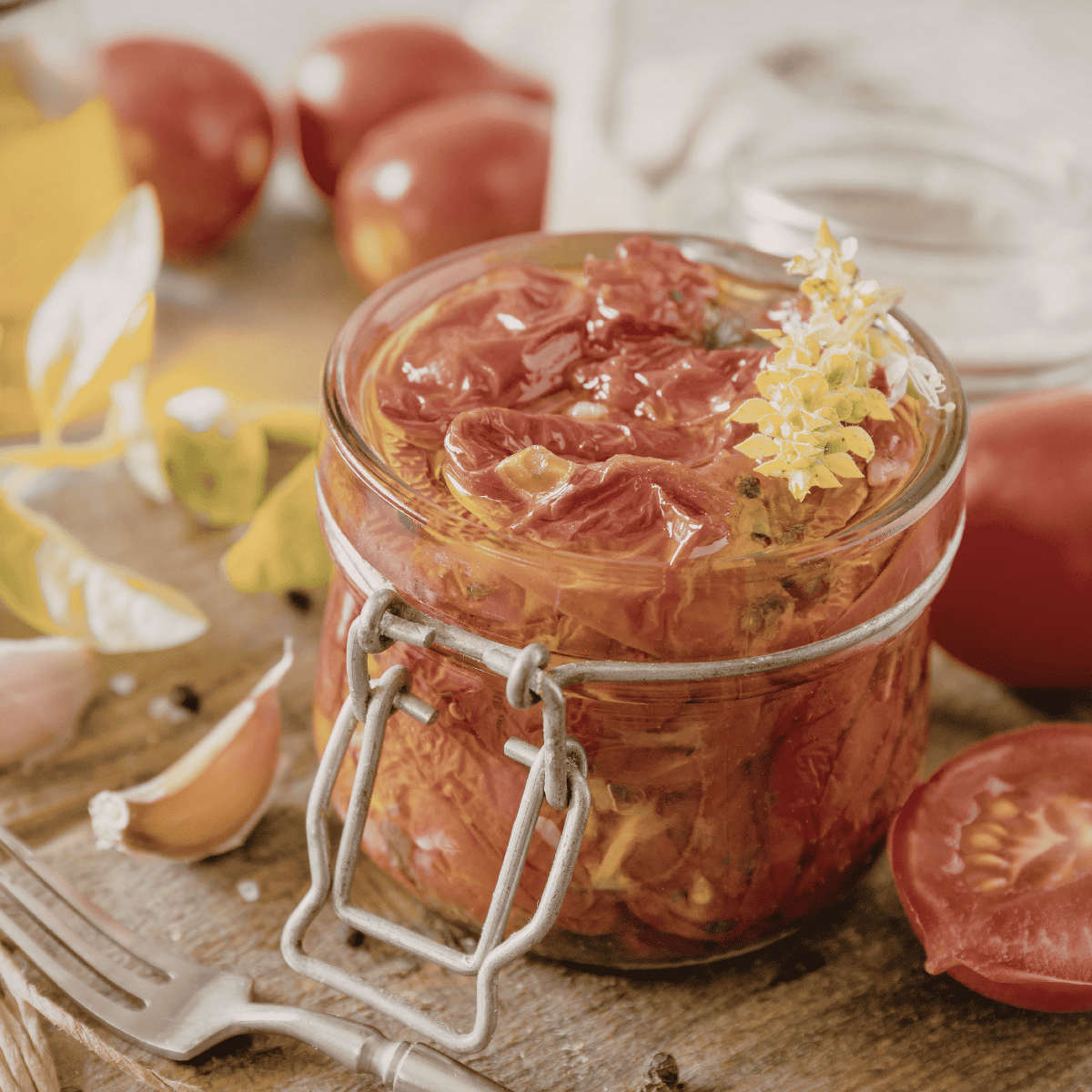
These ingredients quietly support a huge amount of Mediterranean food.
Canned tomatoes, whether whole or crushed, provide sweetness and acidity without needing sugar. Garlic and onions build flavor slowly and gently.
The biggest mistake here is cooking too aggressively. Burned garlic turns bitter fast. Low and slow is the goal. If food tastes harsh or sharp, something probably cooked too quickly.
Vinegars and Citrus
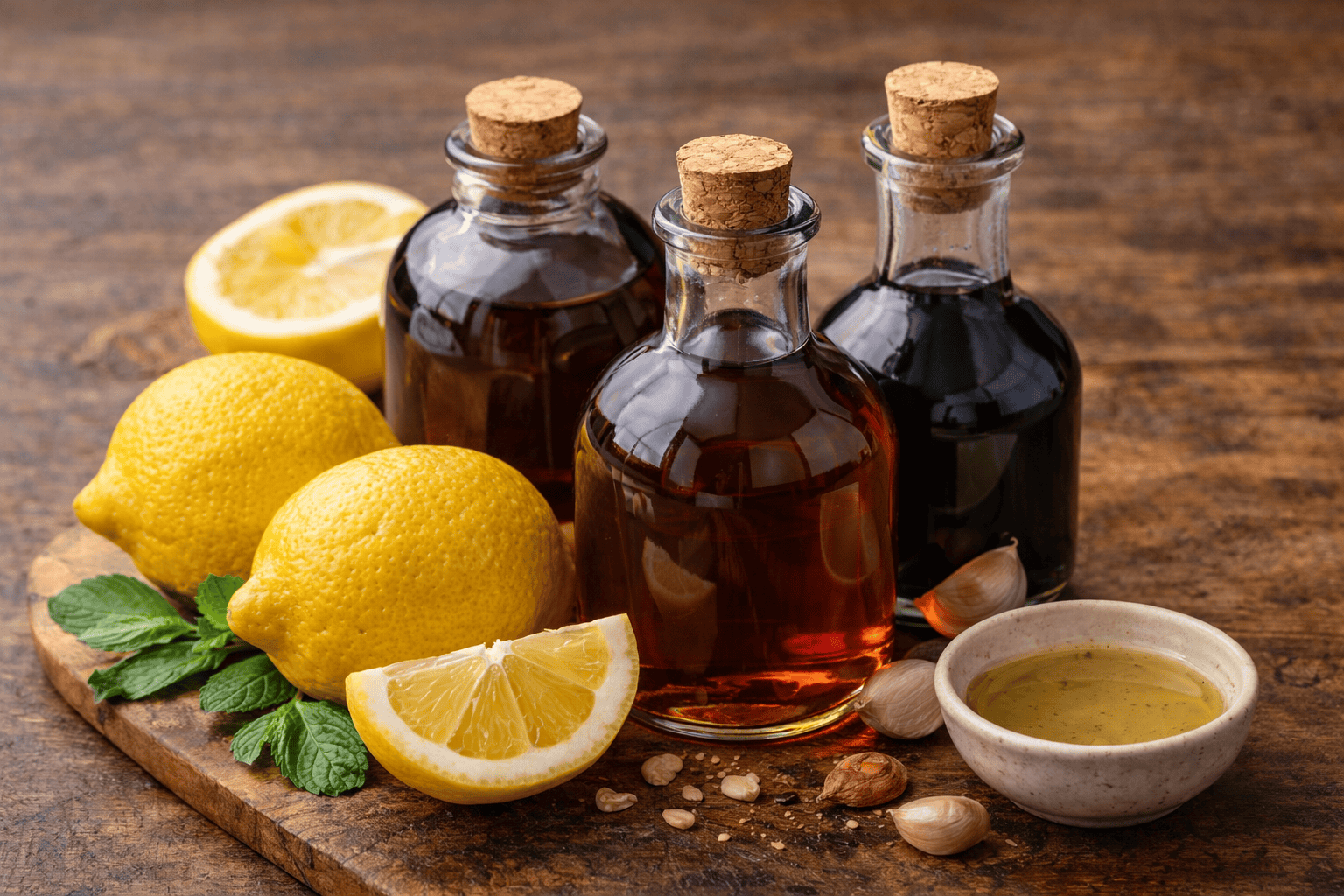
Acid is one of the quiet foundations of Mediterranean cooking. It balances richness and keeps food tasting fresh.
Lemons, red wine vinegar, balsamic vinegar, sherry vinegar, and white wine vinegar are the most common. Lemons are used constantly, both for their juice and zest.
Red wine vinegar shows up in dressings and marinades. Balsamic is used more sparingly, usually for finishing. Sherry and white wine vinegar add brightness without overwhelming other flavors.
Lemon and vinegar are not interchangeable. Lemon adds freshness and aroma. Vinegar adds sharpness. When a dish tastes flat, acid is often what it is missing.
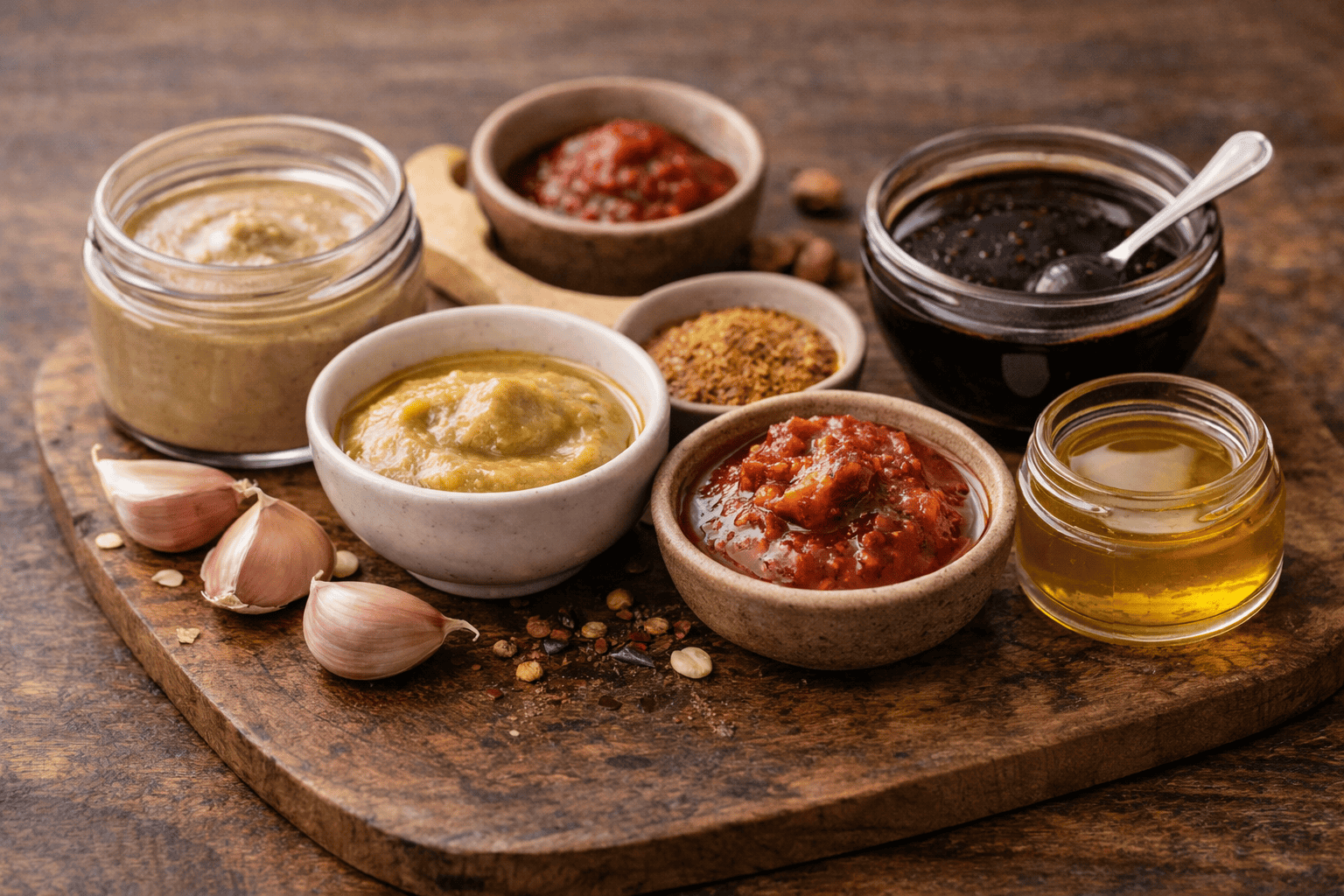
Condiments & Flavor Boosters
These are the ingredients that quietly pull everything together. They are used in small amounts, but they add depth, balance, and that unmistakable Mediterranean feel.
Tahini, Dijon mustard, honey, pomegranate molasses, anchovy paste, and harissa are some of the most common. Each one plays a specific role rather than acting as a general sauce.
Tahini adds richness and nuttiness, especially in dressings, dips, and sauces. Dijon mustard helps emulsify vinaigrettes and adds gentle sharpness without overpowering other flavors. Honey is used sparingly to balance acidity or bitterness and in sweet dishes.
Pomegranate molasses is sweet, tangy, and slightly syrupy, and it is usually used as a finishing touch. A small drizzle can completely change roasted vegetables, salads, or sauces and instantly make them feel more Mediterranean.
Anchovies melt into olive oil and sauces and add savory depth without tasting fishy. Harissa adds warmth and gentle heat and can be stirred into olive oil, yogurt, or marinades for an easy flavor boost.
Once you have these Mediterranean pantry staples on hand, cooking this way stops feeling like a “diet” and starts feeling like second nature!
Did you make this recipe? Let me know!